


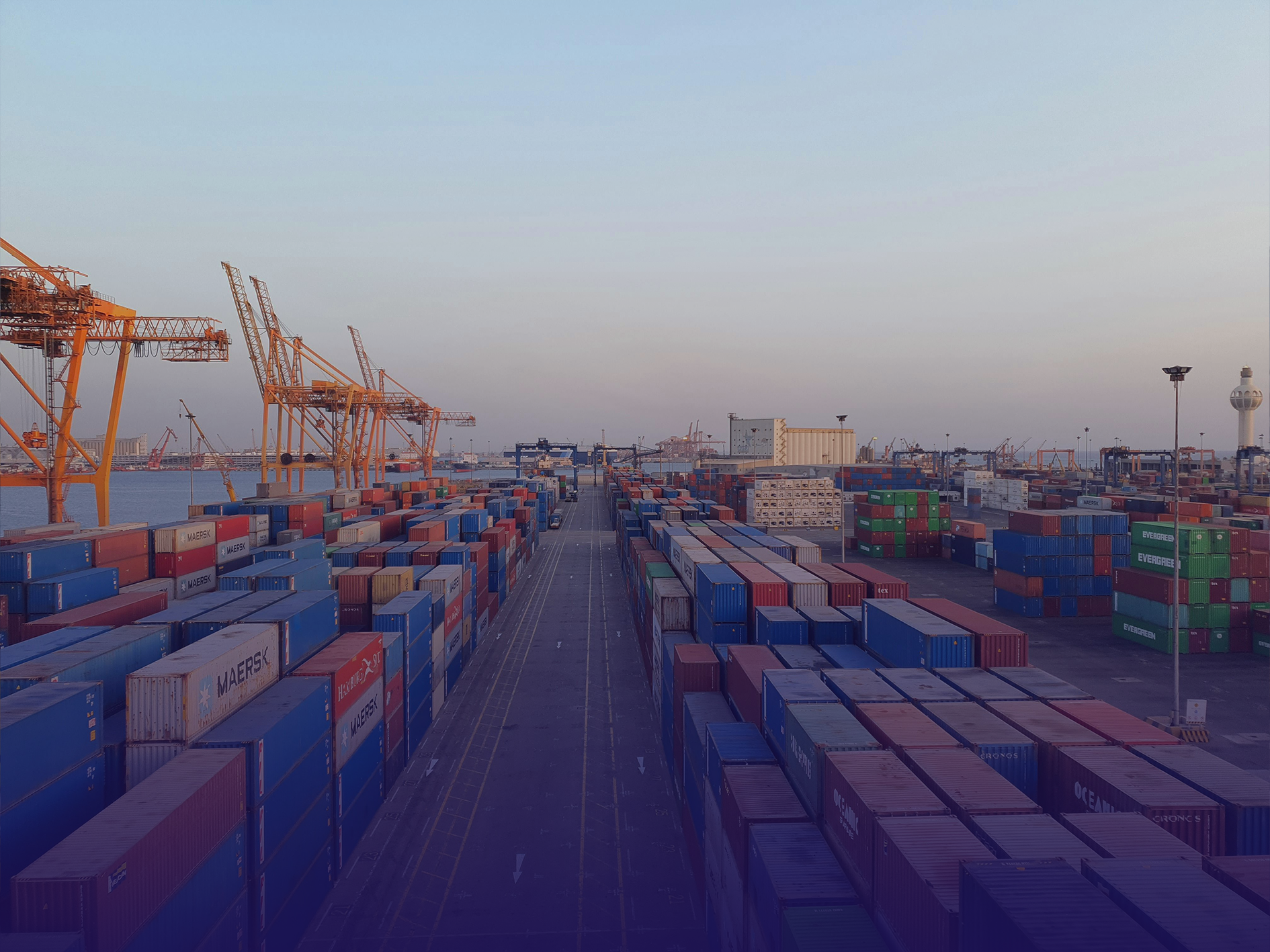
The hope that the supply chain will stabilize immediately following the reopening of the Suez Canal is proving to be wishful thinking in practice. Shypple’s operational data and market analyses for the coming year paint a sobering picture: the congestion of 2025 was not an isolated incident, but a sign of a new logistics reality.
While importers often look for ‘remedies’ such as diverting to other ports or using rail, our internal figures show that the solution lies not in escapism, but in facing the new lead times head-on.
1. The 'Suez effect' causes delays
The expectation that a return to the Suez route will provide relief is tempered by our logistics experts. The reality on the quay is stubborn: the new ships are getting bigger, and unloading these mega-vessels takes longer. Even if the sailing route shortens, terminals will remain overcrowded in the first few months. The congestion simply shifts from the sea to the quay.
"For importers, this means that 'delay' remains a fixed component of the supply chain, regardless of the route."
2. Don't wait for peak season
An interesting trend break we are observing in general cargo is the shifting of volumes. The market seems to be anticipating uncertainty by letting go of traditional peak seasons. We see that shipments for Q1 and Q2 are already being booked in larger volumes and placed earlier than in previous years. It is a signal that a part of the market is choosing certainty over risk: those who wait for the traditional peak season will miss the boat. For refrigerated containers (reefers), this is not an option, but there is a growing realization that congestion is a constant factor that must be accounted for.
3. The limitation of alternatives
In theory, alternative routes seem like the solution, but the data shows a different picture:
- Other ports (Hamburg/Antwerp): For general cargo, this rarely proves operationally profitable. Costs are higher and logistical handling to the Netherlands is more complex. We only see this as an effective remedy for the fresh sector, where speed takes precedence over price.
- Rail: Due to a lack of connections and high costs, rail capacity within the Netherlands is currently not a viable option to alleviate pressure on road transport.
4. Anticipation is the only form of control
The biggest change lies in the predictability of the last mile. Where inland shipping (barge) used to be a flexible option, our planners now standardly calculate a lead time of 7 days. The choice is no longer between 'expensive and fast' or 'cheap and slow', but between certainty and uncertainty.
That is why Shypple is doubling down on proactive information provision: in addition to clearly communicating that 7-day window, there is a major shift in how we handle the inevitable.
"You cannot prevent a strike, but you can dampen its impact on planning by being there early."
By informing customers not when the problem occurs, but at the first sign of a threat, we create room. Room for understanding, but above all, room to tackle questions early. This allows us to adjust and provide explanations before a delay escalates into an unexpected cost. In 2026, this proactive information provision is not an extra service, but part of the core of our service delivery. This shifts the focus from crisis management afterwards to expectation management beforehand.


