Welcome back.
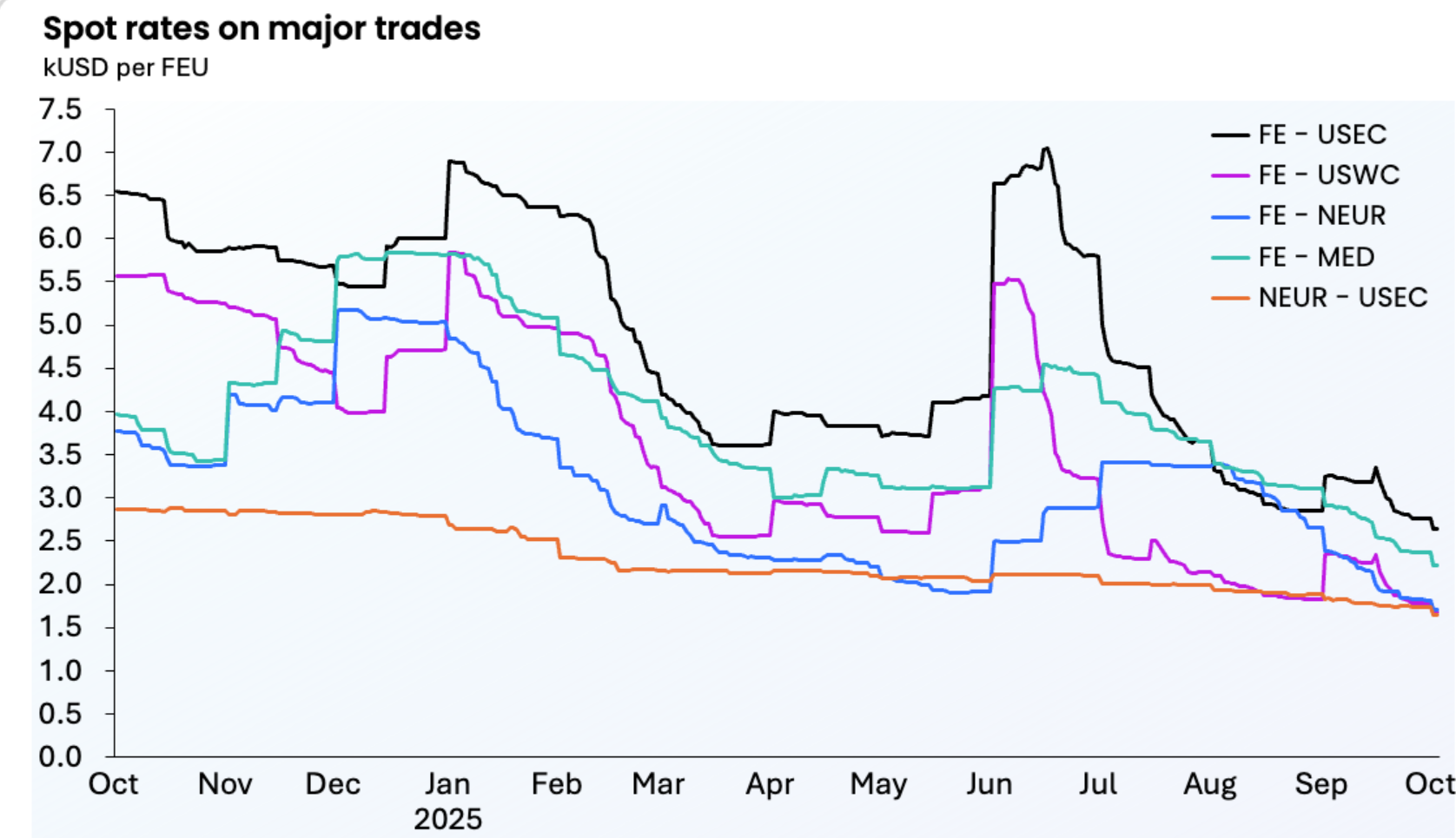
Spot freight rates on the main east–west ocean trades continued to decline this week, extending the downward trend that began in late summer. The Drewry World Container Index dropped by another 5%, which makes carriers use GRI’s to counter this. Even though there is a weaker demand during China’s Golden Week and an ongoing oversupply of capacity, carriers are now taking measures to stem further losses. (The Loadstar)
MSC and Hapag-Lloyd have announced General Rate Increases (GRIs) for mid-October and plan additional blank sailings to temporarily reduce available capacity. (The Loadstar)
Adding to the pressure, the United States has imposed new import tariffs (up to 50% on selected goods such as furniture) which could further disrupt trade flows and weaken demand on the transpacific route. (The Loadstar)
Industry sources indicate that many shippers are adopting a wait-and-see approach, avoiding long-term commitments until rate levels stabilize. For now, carriers are focusing on short-term adjustments to balance vessel utilisation and maintain market share.
Both the Netherlands and Belgium (Flanders) are preparing to introduce higher truck tolls in 2026, but with different goals and outcomes.
In the Netherlands, the truck toll (“vrachtwagenheffing”) will start on 1 July 2026 and replace the Eurovignette. It’s expected to make road transport about 9–10% more expensive, pushing transport companies to discuss new pricing structures. Around 43% of the €1 billion annual revenue will flow back to the sector as subsidies for electric trucks, charging infrastructure and batteries. The scheme aims to accelerate the shift to zero-emission transport, supported by programmes such as the renewed AanZET subsidy opening at the end of September.
Industry experts warn that without support from shippers, electric transport will remain financially challenging. Rising labour costs (3–6%) and new labour laws could further increase total transport costs by up to 10%, strengthening the case for modal shift to inland shipping or rail where possible. (Nieuwsblad Transport)
In Flanders, kilometre-based tolls for heavy trucks will rise significantly as well in 2026, expected to generate €90 million extra that year and €180 million by 2027. The increase mainly targets high-emission diesel trucks to encourage a shift toward zero-emission vehicles. However, transport federations warn that many companies may struggle to absorb these extra costs. Exemptions for zero-emission trucks could remain until 2031, but subsidies are set to decrease, reducing the financial incentive. (Flows)
What this means for shippers:
Expect higher road transport costs from 2026, but also new opportunities for greener logistics and modal alternatives. Discuss rate adjustments early and explore options for zero-emission or multimodal transport to stay ahead of the transition.
tip: Speak with your account manager to assess how these changes could affect your shipments and explore strategies to optimise costs and sustainability.
The Dutch-flagged cargo ship Minervagracht was struck this week in the Gulf of Aden, sustaining serious damage and catching fire. Two crew members were injured and the entire 19-member crew was evacuated. The Houthis claimed responsibility, accusing the ship of violating a ban on entering Israeli ports. (Nieuwsblad Transport) (Nieuwsblad Transport)
These attacks underscore the growing security risk for vessels transiting routes near Yemen and the Gulf of Aden. The Netherlands is calling for the European Union to place the Houthis on the terrorist list, citing their threat to freedom of navigation. (Reuters)
Airfreight between Asia and Europe has experienced a temporary surge in rates due to a combination of factors: China's Golden Week, a typhoon, and the temporary shutdown of China-Europe rail services. These disruptions led to a brief spike in demand, but the impact on rates was short-lived. (The Loadstar)
MSC has confirmed it will not use the Northern Sea Route (NSR) for its Asia–Europe services. The route has attracted attention recently, particularly with the launch of the China-Europe Arctic Express (CAX), but MSC considers the NSR too risky for regular container operations. The Arctic route could theoretically shorten sailing distances by over 3,000 nautical miles, but reliability and safety remain priorities for major carriers. While other shipping interests are experimenting with the NSR, MSC rules it out.
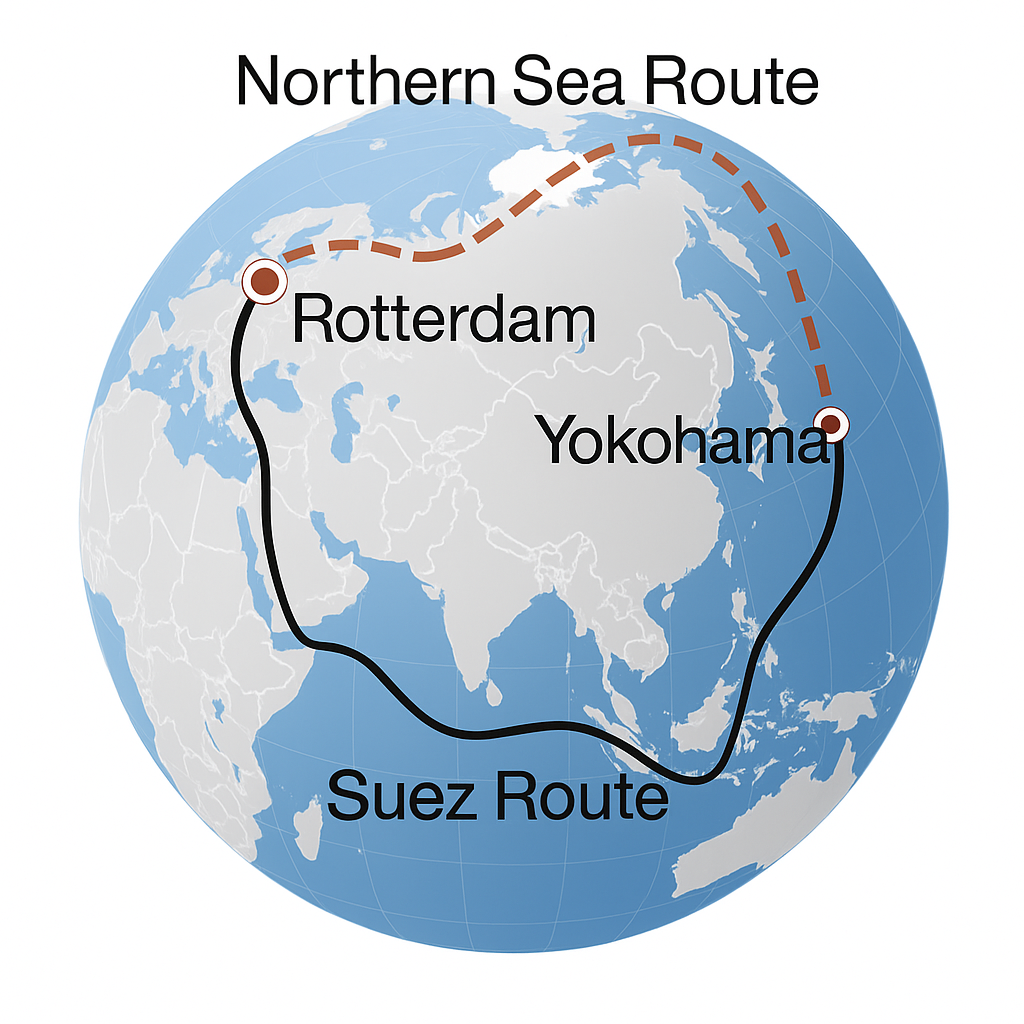
The main challenges of the NSR include unpredictable ice conditions, limited port infrastructure along the Arctic coast, and geopolitical uncertainties in the region. These factors make transit times less reliable and increase operational risks for vessels and cargo. MSC has emphasised that traditional routes continue to offer far greater reliability and predictability for scheduled services. (The Loadstar)


