News, this week:
Rijkswaterstaat (RWS, the Dutch national roads and waterways authority) closed two lanes of the western Suurhoffbrug on Wednesday evening, 16 September, after inspectors found cracks in one of the bridge's main girders. The Suurhoffbrug is the A15 bridge that carries most truck traffic to and from the Maasvlakte, the deep-sea container terminal area of the Port of Rotterdam.
All traffic now shares the remaining lanes and the hard shoulder. Deltalinqs (Rotterdam port business association) says this halves capacity on the main route to the Maasvlakte, where APM, ECT and other big terminals sit. RWS expects the repair to take four to eight weeks. RWS is already at work: it fully closed the old Suurhoffbrug overnight on Saturday 19 to Sunday 20 September to repair part of the bridge.
The government's 2027 budget, presented on Prinsjesdag (15 September), adds €5.1 billion to the national mobility fund through 2040 for road, bridge and rail maintenance, on top of money already agreed.This is a multi-year programme, and the Ministry itself still warns of an €80 billion maintenance shortfall through 2040.
💡What to do: Build in extra time for truck pickups and deliveries at Maasvlakte terminals over the next month, and share your planning with us so we can route around the worst congestion windows.
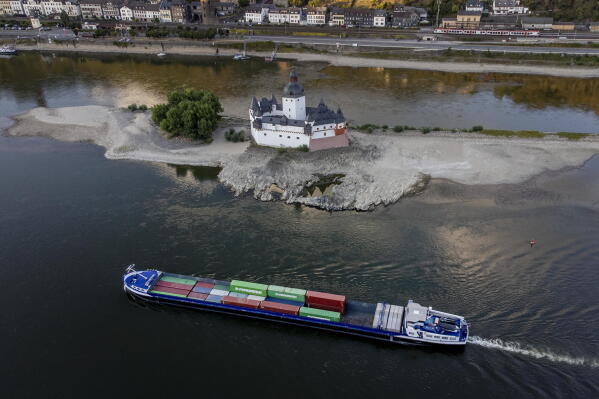
The Rhine's reference gauge at Kaub read 16 centimetres this morning (21 September), down further from 23-24 centimetres on Friday, close to the record low of 6 centimetres set on 14 August and far short of the recovery some forecasts expected by now.
Barge operator Optimodal has stopped accepting new container bookings on the Rhine to and from Rotterdam and Antwerp because of the low water, and cannot shift the freight to rail either, since no train paths are available. Separately, RWS has warned of possible one-way traffic on the Upper IJssel (a Rhine branch in the eastern Netherlands) if the shallowest sounded depth drops below 1.45 metres.
💡What to do: If you move cargo by barge on the Rhine, talk to us about truck alternatives now rather than waiting for a booking to be refused. Budget for higher inland cost into the Netherlands, Belgium and Germany while this lasts.
The Panama Canal Authority has postponed the further draft cut it had planned for 1 October, so ships can keep loading up to the current 14.63-metre (48.0-foot) limit rather than the deeper cut previously announced. Better news than our last update carried, but daily transits keep falling regardless: down from 36 to 32, with the largest ships (Neopanamax) capped at just 9 slots a day. The cause is unchanged, a long drought has left the lakes that feed the locks short of water, with a dry El Niño expected late this year.
This still affects routes that cross the canal, including our Latin America lanes (Costa Rica, Colombia, Honduras, Guatemala) and the US east coast.
💡What this means: The draft holding steady helps how much cargo each ship can carry, but slot scarcity is the bigger constraint now. If you ship through Panama or on Latin America lanes, keep sharing your forecasts with us early.
Shanghai-Rotterdam rates dropped again, continuing the decline from our last update. Ships on the lane are running under 80% full, so carriers keep discounting to fill them. Congestion is adding to the picture too: ships waiting to berth at Shanghai and Ningbo, now face delays of up to 10 days after recent typhoons.
That is about to change. China closes for its National Day holiday (Golden Week) from 1 to 7 October, and carriers are cutting sailings hard to match the drop in factory output before and after. MSC has blanked several Asia-Europe sailings across weeks 39 to 41, and other carriers are cancelling on top of that. Space in the weeks just before the holiday goes first.
Our own procurement team sees the same pattern:
💡What to do: Book two to three weeks ahead of your Golden Week sailings and share your forecasts with us, so we can hold space before the squeeze hits.
A strike by empty-container yard operators at Mundra, India's largest container port (on the west coast, in Gujarat), ran from 28 August to 10 September. About 1,500 truck transporters joined in support, and container pickups stopped almost entirely. Roughly 5,000 containers a day were affected at the peak.
Operations resumed on 10 September, but the backlog is still clearing. Expect truck queues and appointment delays at Mundra for some time yet. MSC, Hapag-Lloyd, ONE and CMA CGM all issued customer advisories during the strike.
Space out of India stayed tight even after the strike ended. Some carrier contracts ran out of allocation faster than usual through September, pushing bookings onto pricier alternatives.
💡What to do: If you import goods from India, book earlier than usual and expect some schedule slippage until the backlog fully clears.
Road fuel surcharges for the Netherlands and Belgium jump to a new record of 28% this week (week 40), up from 25% where they had held flat for four weeks. Diesel is back up to €2.282 a litre, after dipping to €2.133 in week 38. View the updated surcharges here.
.png)


