Welcome back.
Container spot rates from China unexpectedly rose during Golden Week, reversing the downward trend of recent months. The latest Shanghai Containerized Freight Index (SCFI) shows a week-on-week increase of around 4%, despite the usually quiet holiday period. (Flows)
Analysts link this rise to General Rate Increases (GRIs) and new FAK (Freight All Kinds) rates introduced by major carriers. Shipping lines are using these measures to stabilize revenue and manage capacity after months of weak demand and low prices.
Additional cost pressures are coming from higher port and handling fees, which increase total logistics costs for shippers. The combination of rising freight rates and surcharges is creating uncertainty for supply chains, especially on Asia-Europe and Asia-America routes.
The largest increases were on the Asia-North Europe trade: the Shanghai-Rotterdam leg rose 6% week-on-week (WCI), while the SCFI’s Shanghai-North Europe base port rate gained 7%, often indicating trends for the coming week. (The Loadstar)

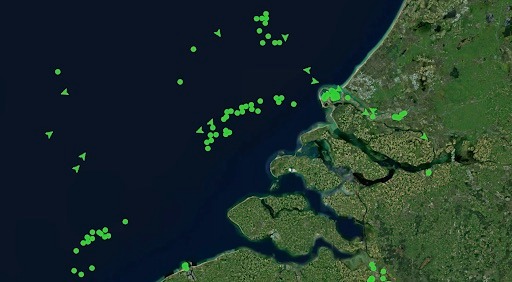
Due to the strikes and protesters' actions, a significant backlog has arisen in the port of Rotterdam. Capacity in Rotterdam remains extremely strained even after the recent stevedore strikes stopped. The Port of Rotterdam has reported that it currently lacks the ability to absorb excess traffic from Antwerp, leaving a substantial queue of ships waiting offshore. (Nieuwsblad Transport)
Meanwhile, some vessels are skipping Rotterdam entirely, creating uncertainty for exporters, making the situation even worse and putting additional pressure on alternative routes. According to the Port of Rotterdam, around 30 container vessels are currently waiting to be handled, including 15 deepsea ships. Clearing the backlog is expected to take until the end of October, with ripple effects likely to continue beyond that. (Nieuwsblad Transport)
Earlier this month, on Friday morning, October 10, around 100 activists blocked the entrances of APM Terminals and Rotterdam World Gateway (RWG) on the Tweede Maasvlakte. The protest, organized by Geef Tegengas, targeted the port over alleged complicity in human rights violations in Gaza and aimed to disrupt container operations. The blockade added pressure on top of the ongoing stevedore strikes at the time. The activists have since cleared the terminals, and normal operations at both APM and RWG have resumed. While the protest caused temporary delays in container handling, there are no current disruptions related to this action. (Flows)
Congestion in Antwerp has eased following several strikes between October 5 and 14. While some ships previously bypassed the port due to delays, the backlog for incoming vessels is now nearly cleared. This morning, there are 23 ships without a confirmed schedule and 15 vessels experiencing delays in Antwerp. Outgoing traffic is no longer affected, and Zeebrugge is operating normally.
The introduction of U.S. tariffs on Chinese-built vessels is causing significant disruptions in global shipping. Additionally, China has implemented a decree imposing port charges on U.S. vessels, effective from October 14, 2025. U.S. ships are now required to pay 400 yuan (approximately $56) per net tonne when calling at Chinese ports. This reciprocal measure aims to counterbalance the U.S. tariffs and further intensifies the cost pressures on shipping operations. (Flows)
These developments are contributing to increased freight rates and capacity constraints, particularly affecting routes between Europe, the U.S., and Central America.
Airfreight spot rates from China to Europe have fallen slightly over the past two weeks, dropping about 4%, following a pre-Golden Week surge of around 5.7% between mid-September and late September. Despite this recent decline, rates remain approximately 1.5% higher than mid-September levels.
Looking ahead to the peak season, rates would normally be expected to increase again toward the end of October, as airlines switch to winter schedules and belly capacity reduces. Based on previous years, spot rates could rise 3-8% from early October to mid-November. (The Loadstar)
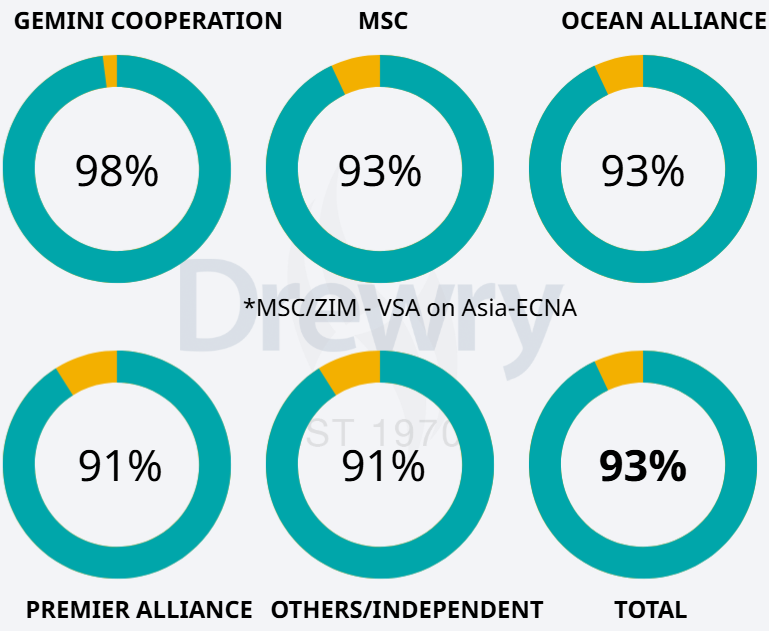
Blank sailings: 7% cancellation rate
Hapag-Lloyd has announced the suspension of its Caribbean Express Service (CES) from the Port of Antwerp to the United States and Central America. This decision, effective from the end of 2025, will result in the loss of two weekly calls at Antwerp. The move is attributed to low freight rates and high charter costs, which have rendered the service unprofitable. (Flows)


