Two weeks ago, rates from Asia to North Europe had climbed for six weeks straight. The picture is changing. The market has now accepted the situation, and the rate rise for next week is about 7%: far gentler than the jumps we saw in May and June. The Loadstar
Shypple experts state:
"We are near the top. Signals point to rates easing from the end of July."
However, space is still very tight. Carriers planned only four cancelled sailings on the Asia to US route next week: a sign capacity will stay very tight.
Please note: India is now facing the same squeeze as China: equipment shortages, congestion at the Nhava Sheva and Mundra ports, and “ghost bookings” (space booked only to hold it, never filled) which makes real space harder to find.
💡 What to do: Book early and share your forecasts with us, so we can secure space as early as possible.
Last week a network outage, record 38°C heat, closed truck gates and protests around the port stacked up on top of each other. The timeline shows how it unfolded, day by day.
The picture today: temperatures have dropped and the leftover containers are being worked through.
💡 What this means for you: If you import through Rotterdam, expect delays for a few more days.

CMA CGM has started sending one of its services (FAL3) back through the Suez Canal, eastbound from 18 June. It is the first sign that carriers may slowly return to the canal.
What this means for you:
At the same time, the Strait of Hormuz remains risky. A container ship was hit by a projectile last week near Oman. The UN shipping body paused its evacuation programme to recheck safety. Most ships moving through now are leaving the Gulf, not entering. Carriers are bringing trapped crews out, not restarting services. They say they need a safe, lasting route before they put their networks back. (The Loadstar)
Carriers must pay for the carbon dioxide their ships give off in European waters. They pass this on to shippers as a fixed fee per container, called the EU emissions surcharge (EU ETS). The amount is set each quarter. From July (Q3) it goes up on most lanes.
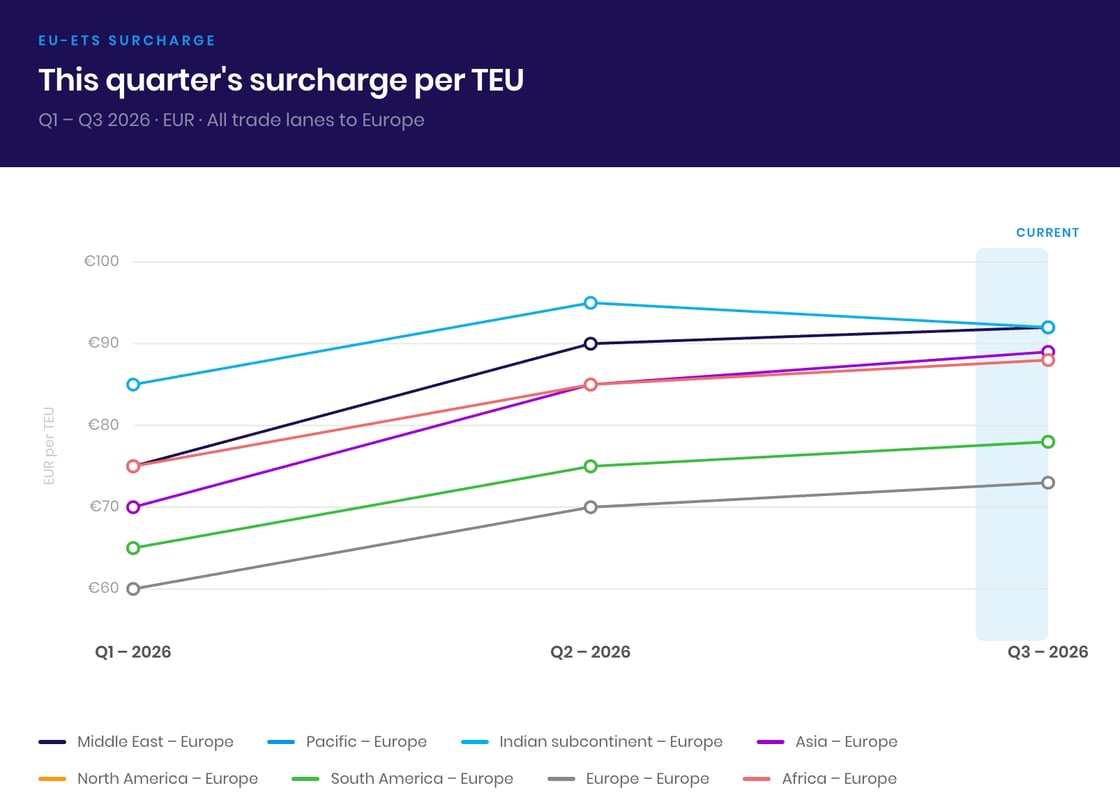
Read more about the ETS and the new UK ETS.
Road fuel surcharges for trucking are listed in our fuel surcharges knowledge base article
From 1 July, Dutch trucks pay a per-kilometre toll (the old Eurovignet ends), and Belgium's per-kilometre rate goes up the same day. Shypple passes these on at cost, as a separate line on your invoice. Full details here.


