This week in brief
Here is what it means for you.
Typhoon Dolphin made landfall on the Zhejiang coast between 9 and 10 August at super typhoon strength. It is now weakening as it moves inland.
The storm is passing. The delay it left behind is not. Once terminals restart, ships are expected to wait 7 to 10 days or more for a berth, with yards 75% to 90% full. Feeder services are running 3 to 7 days behind. Source.
This lands on top of a week that was already tight. In our last update we flagged week 33, so this week, as the week with the least space in August. The backlog now sits on top of that.
What to do: Assume your Chinese sailing in the next three weeks moves later than the schedule says. Book early, and tell us which shipments cannot slip so we can prioritise them.
Spot rates from Asia to Europe fell for a fourth week in a row. Carriers have cancelled or scaled back the increases they had planned. Our own procurement team sees the same picture out of China: easing, but slowly. Source: The Loadstar.
India is the exception, and it is worth separating from the rest. Rates from India to Europe sit above $5,000 for a 40-foot container, space is short, and empty containers are hard to get. It is the same pattern we saw out of China earlier this year.
Road is getting more expensive, and not for a single reason.
Fuel
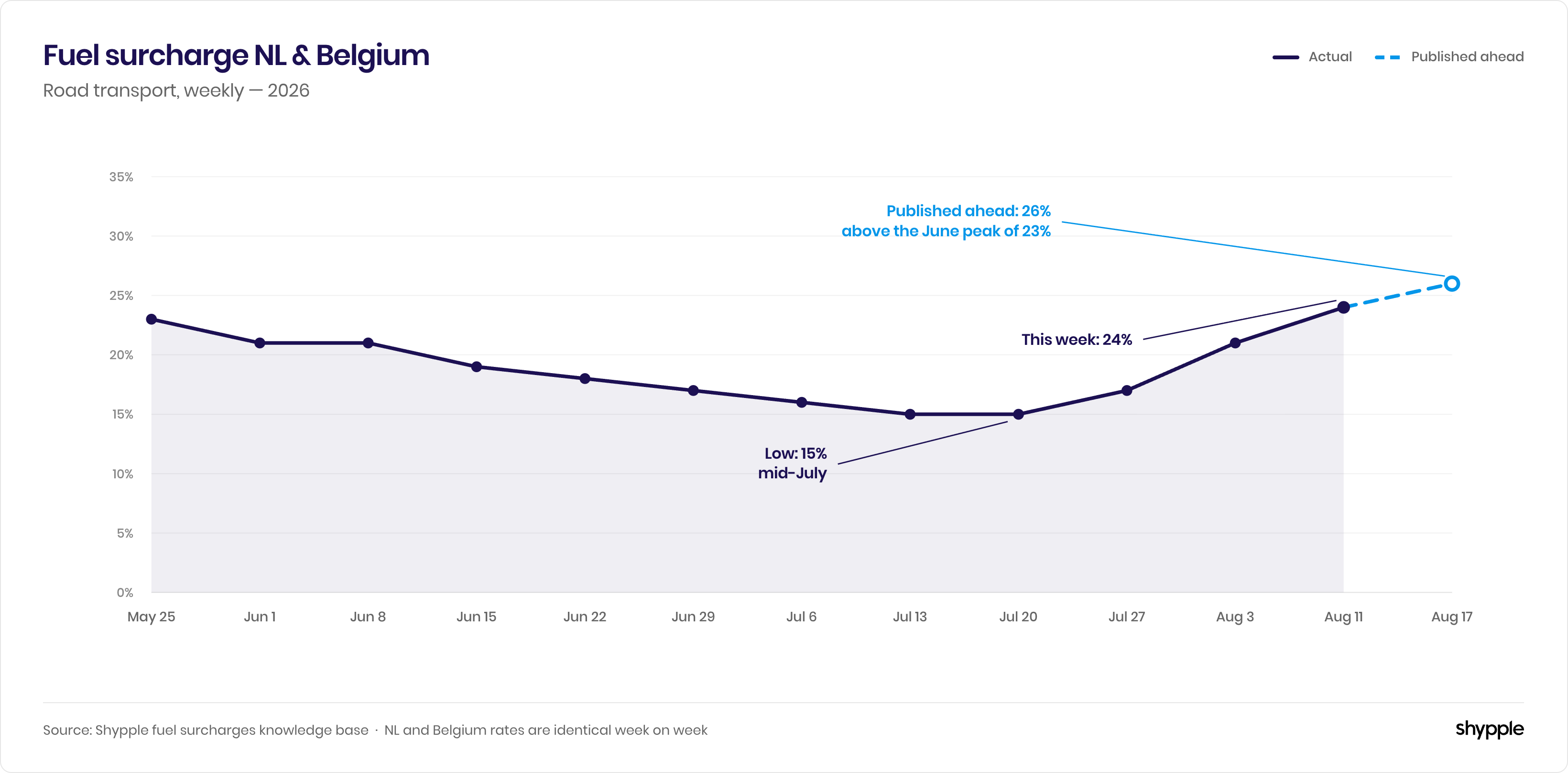
Road fuel surcharges bottomed at 15% in mid-July. This week they are 24% for the Netherlands and Belgium, based on a diesel price of €2.191. Next week they go to 26%, based on €2.216. That is above the June peak of 23%.
The Rhine
Water levels are at a record low, so barges carry a fraction of their usual load. That cargo has to move another way, and it moves to the road. Source: The Loadstar.
Road cannot absorb it
One barge replaces a long line of trucks, and August is the month when drivers are on holiday. Germany has relaxed the Sunday driving ban for the first time in around 14 years. Source: Transport Online.
It is showing up in prices. The first hauliers have started to charge a congestion or peak season surcharge, including in Belgium. These are early signals rather than a market-wide move.
There is one piece of better news. MSC says it now has workable alternatives for shippers hit by the barge problem. Source: The Loadstar.
What this means: Budget for higher inland cost into the Netherlands, Belgium and Germany for the rest of the summer. Current fuel percentages are in our fuel surcharges knowledge base, available to customers. Ask us about alternatives on your lane.
The EU packaging regulation, known as PPWR, applies from 12 August 2026. There is no transition period. Packaging you place on the EU market from that date has to meet the new rules, even if it was produced months earlier.
Who it applies to. Importers, manufacturers, distributors, online marketplaces and fulfilment providers. There is no exemption for smaller companies.
What it covers. All packaging, in every material: plastic, paper, glass, metal and wood. It does not matter what is inside the box. Electronics, furniture and consumer goods are in scope just as much as rice or fresh fruit.
What starts on 12 August, for all packaging
And for food packaging only
The larger changes follow in 2030. Reuse targets for transport packaging such as pallets, crates and drums, and a ban on small single-use plastic for loose fruit and vegetables. The European Commission published guidance and FAQs on 30 March 2026.
What to do: Read our explainer, then check with your suppliers and packaging partners. They pack the goods, so this lands on them first.
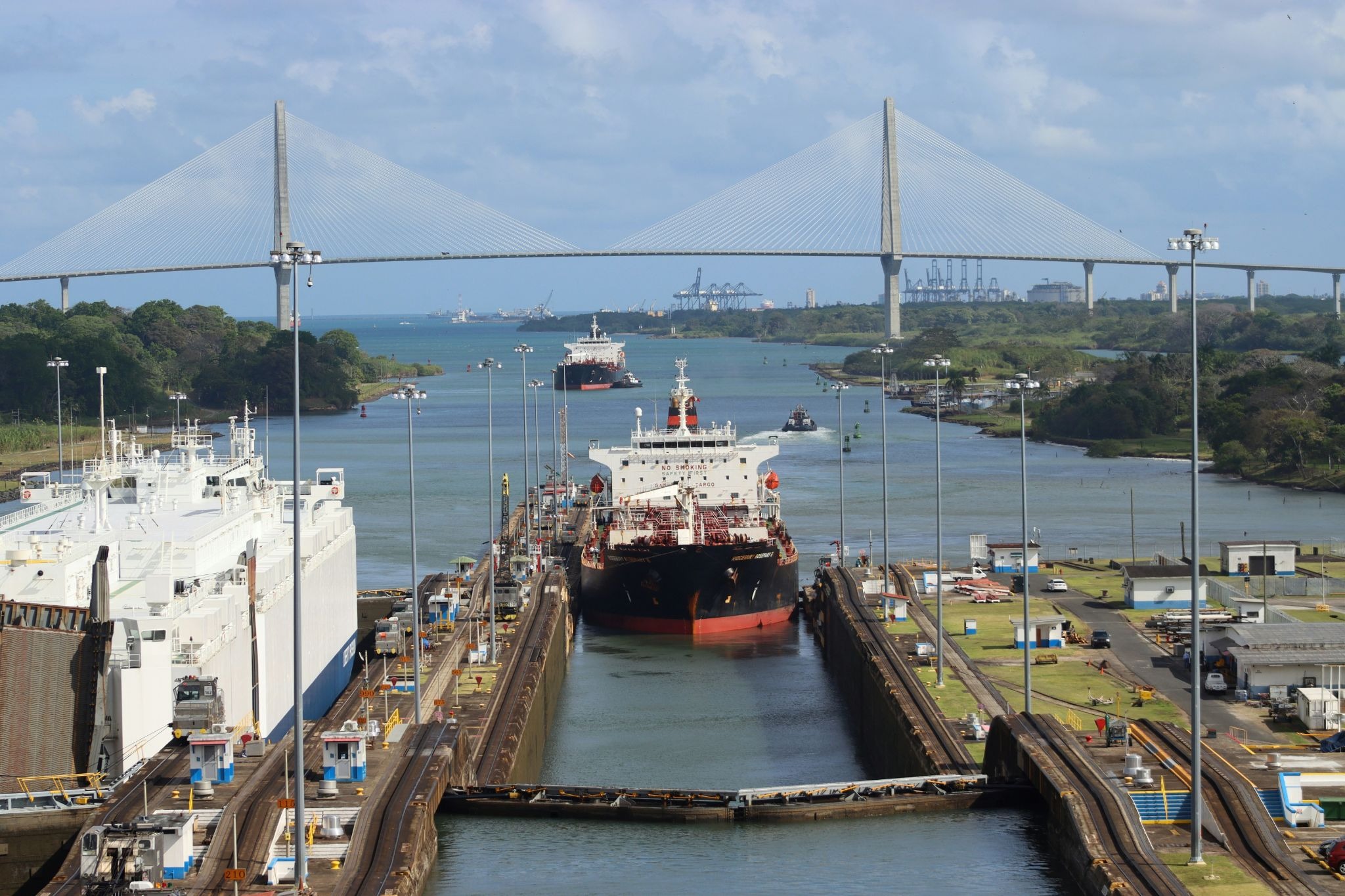
The canal keeps lowering the draft, which is how deep a ship may sit in the water. A lower draft means less cargo per ship. At the Neopanamax locks the limit steps down four times:
The cause is low water in Gatun Lake, with a strengthening El Niño forecast. Daily transits are unchanged. It is the draft that is being cut, not the number of ships. Source: Panama Canal Authority.
What this means: If you ship on Latin America lanes, book earlier and expect less cargo per sailing.
Source: Container News and Shypple Procurement.
Air spot rates fell 6% in July and are still coming down. The decline is gradual rather than sharp, held up by the Iran conflict and moving jet fuel prices.
The peak season looks weak. Analyst Xeneta reports very little interest in peak season charters, which points to a softer second half of 2026. Capacity use rose two points year on year, to 61%. Source: Xeneta.
What this means: If you already ship by air, the market is moving your way. It is a good moment to fix rates for the autumn rather than ride the spot market.


