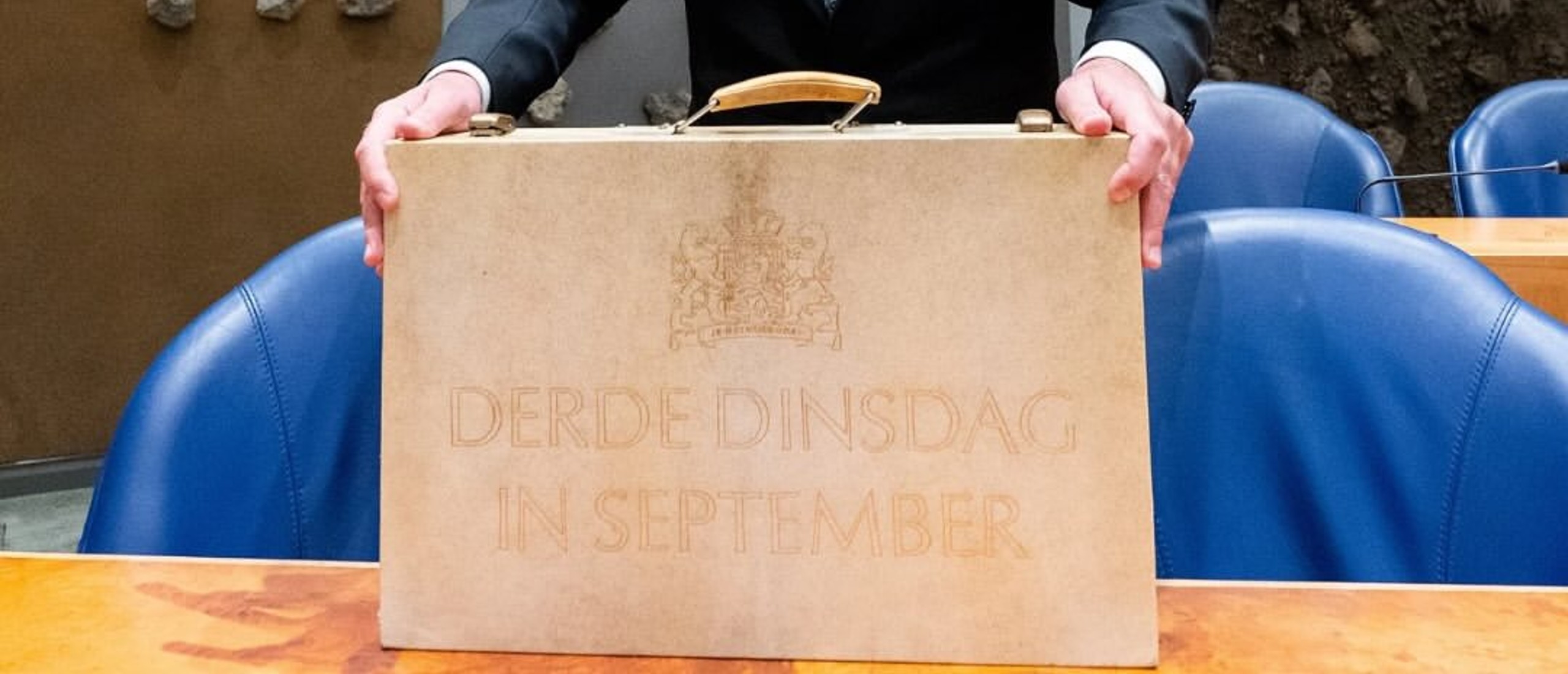
On Prinsjesdag, 15 September 2026, the Dutch cabinet presented its 2027 budget, the Miljoenennota. Its theme is "earning our prosperity anew", and it rests on three pillars: investment, reform, and international cooperation.
Most of it does not touch logistics. But a handful of measures matter if you import goods into or through the Netherlands, and they matter differently depending on what you move. Here is a plain read of what changes, when, and for whom.
The budget puts international cooperation at its core, and it is unusually candid about why. The cabinet points to growing imbalances in global trade and money flows between the US, the EU, and China. The US imports more than it exports and borrows to do so, while the EU and China produce and save more than they spend. When those gaps run for years, the cabinet warns, they invite protectionism and political tension, which is exactly what an importer feels as sudden tariffs, rule changes, and volatile lanes.
Its response has four parts:
No single measure changes your shipments overnight. Together they signal where trade rules are heading over the next few years: toward more resilience and less exposure to single sources. In practice that is a nudge to know your dependencies and to have a second origin or routing ready before you need it, rather than after a shock.
Two changes matter for pre and post haulage, the road legs on either side of the ocean or air move.
The reduction in diesel excise duty, 11,905 cent per litre, is extended into 2027, so the relief on the pump price that hauliers pass through stays in place next year. In 2028 it is only partly extended, so the discount is phased out more slowly, and it disappears fully in 2029. In short: no rise in 2027, but higher diesel costs are coming in 2028 and 2029. Worth adding to the picture is the EU's ETS2 carbon pricing for road fuels, which begins to phase in from 2027, so the underlying direction for diesel cost over the next few years is upward. This is a Q4-and-beyond budgeting point, not a 2027 problem.
The transport sector also received temporary relief in 2026. Road tax (motorrijtuigenbelasting) for trucks was set to zero from 1 July to December 2026, and the truck charge (vrachtwagenheffing, the new per-kilometre road charge for trucks) got a temporary discount from 1 September 2026. Both are short-term measures to soften higher fuel costs, and both run out at the end of the year, so they are a tailwind for the rest of 2026 rather than a new baseline to plan 2027 around.
Two measures touch the growers and traders in the fresh supply chain, which means they touch the cost base behind a lot of the cargo we move.
The planned removal of the CO2 levy for greenhouse horticulture is reversed and postponed to 2028, to line up with the European ETS2 system that will price carbon more broadly from then. Greenhouse growers also get a temporary cut in energy tax to offset the cost of the green gas blending obligation. The net effect is that Dutch greenhouse growers, who supply a large share of the tomatoes, peppers, and flowers in the chain, avoid a new cost in 2027, with the harder carbon pricing arriving a year later.
Separately, the reduced VAT rate for ornamental horticulture is being scrapped, which raises VAT on flowers and plants from 2028, moving them from the lower rate toward the standard 21%. That mainly affects what is sold into the Dutch market rather than the freight itself, but for anyone trading flowers and plants it changes the landed price to the customer, so it is worth modelling early. The exact detail sits in the Belastingplan 2027, so the final rate and date are worth confirming before you act on them.
The EU's VAT in the Digital Age package (ViDA) moves ahead. It is a broad modernisation of EU VAT with three strands: digital reporting with e-invoicing, new rules for the platform economy, and a single VAT registration across the EU. The part on the platform economy is introduced from 2028, while the e-invoicing and single-registration strands phase in later this decade. Over time this reduces the paperwork of trading across borders, but it also means importers and exporters will need to move to structured e-invoicing and adjust how and where they register for VAT. For anyone shipping across borders at volume, it is a change worth preparing systems for early rather than at the deadline.
The budget also invests in the network your inland legs run on. The cabinet puts around € 1,5 billion extra into major maintenance of roads, bridges, tunnels, waterways, and water works between 2029 and 2035, grows the Mobility Fund by roughly € 5,1 billion through 2040, and adds € 300 million a year for regional accessibility. The choice behind the numbers is clear: shift money from building new roads toward maintaining and renewing what already exists.
For shippers, this is about reliability rather than speed. Ageing bridges, locks, and rail have brought weight limits, closures, and diversions in recent years, and each one lands as a delay on the road or barge leg between Rotterdam and the hinterland. More maintenance money should ease that over time. The honest caveat: the ministry itself flags a maintenance shortfall of roughly € 80 billion through 2040, so this narrows the gap rather than closing it, and occasional restrictions will stay part of planning.
The aviation tax is being differentiated by distance from 2027, so short flights are taxed less than long ones, and the high long-haul rate is lowered to the German level of € 59,43. Worth a clarification, because it is easy to misread: this is a passenger tax, levied per departing traveller. Air cargo is exempt, so the direct effect on air freight rates is limited. The only indirect link is that passenger-flight economics influence belly-hold capacity on the routes that also carry freight, so the effect on airfreighted produce is second-order at most.
The 2027 budget does not reshape logistics. It does set a direction: diesel relief now but not for long, a firmer trade policy built around resilience, and VAT changes that arrive in 2028. The concrete tax figures live in the Belastingplan 2027, which is where the next round of detail will land, so that is the document to watch for the exact rates, thresholds, and dates behind the measures above.


%20(1).jpg)
%20(1)%20(1).jpg)
%20(1).jpg)
_result.jpeg)


.jpg)